

200: The Bicentennial Edition
L.M. Sacasas, Thomas Harding, Maryanne Wolf, Ta-Nehisi Coates, James Harpur, William Trevor, Fiona Benson, Claire Keegan, Marion Turner, Henry James, Neil Postman, Sylvia Plath and more.
Welcome to a largely-retrospective edition for the 200th edition in the 10th year of The Fortnightly.
The Fortnightly is 200. Or 10.
I started this newsletter in 2016 as a private venture for about 40 friends and colleagues. Its initial impulse still lives: gathering interesting things about books, teaching (especially English), thinking, education.
I know people don’t read every part of any newsletter. There are now so many good ones. My vision is that this pops onto your device on a Saturday morning when you’re having a good coffee, and you get some pleasure from it, and two or three ideas which you carry forward.
Two more things:- (1) I’m most grateful to those of you who support this by paying for subscriptions (The Occasional is for just you, as well as access to all the archives), and (2) I’m thrilled to have made so many connections across the world.
After the interview with L.M. Sacasas beneath this, there’s one section per year up to 2025 from past editions, and then the regular ‘Teaching and Learning Things’ & ‘Et Cetera’.
Interview of the Week
Few writers on this platform speak to me as significantly as L. M. Sacasas in ‘The Convivial Society’, and this time I highlight his recent interview with Sam Pressler of Connective Tissue as an excellent way into his writing. This seems appropriate for Fortnightly 200, as so much of what Sacasas says about the way we live now, and our problematic relationship with online technology, chimes with what this 10-year old project has been aiming for.
The interview has the snappy title of ‘Achieving independence for the sake of mutual interdependence’.
A convivial society does not ask the human to operate at the scale of the machine, but rather configures human relations to be more hospitable to proper human scale. That can be in terms of scales of speed, scales of size, or scales of power. There are various ways in which we operate at scales that are not conducive to the flourishing of the embodied, fundamentally limited creatures we are.
and
Recently, I was at a conference and I was asked: “What technology is an ideal technology?” I usually freeze in those moments, but I had Hannah Arendt on my mind, so I said, “Well, the table.” Things that we don’t think about as tools can be very conducive to flourishing. The table is a piece of human artistry and craftsmanship. It serves a purpose. It brings people together while maintaining their distinction. It allows for conversation, for feasting, for celebration.
And now to previous years, starting with 2016
The very first Fortnightly recommended two books (the defining feature of this venture):
I was late to Ta-Nehisi Coates’s Between the World and Me (it appeared on lots of Books of the Year lists), but it’s as good as many people say. There is no soft-pedalling or euphemism here on the truth of the African-American experience.
Thomas Harding’s The House by the Lake excellently tells a century of stories about Berlin, and Germany; this is history by a vertical drilling down through the events which happen to a single summer house near the German capital. The First World War, Weimar, the Third Reich, the DDR, reunification - all in such a short period. Harding’s Hanns and Rudolf is also worth reading.
2017
I gave a talk on William Trevor at my school, alongside the novelist Joseph O’Connor, who read out the story ‘Another Christmas’.
My talk was subsequently published in the Irish Times. On my site too.
Here is a good review by Joe of the two-volume Collected Stories, which I treated myself to. Re-reading them, what is striking is the sheer consistency of the stories, across almost 2000 pages. And I re-acquainted myself with The Old Boys (still sparkling after 50+ years, though not typical of what was to come), the superb Nights at the Alexandra, and much more.
2018
Claire Keegan visited our school, as she had done in in 2014, and again spoke with such thoughtful sensitivity about her book Foster, and the processes of writing:
You go into what you don’t know, not what you do know. Stories always have a problem, they are always about a time of loss, of difficulty. I cannot know what happens next. I would lose the tension in the writing if I knew what comes next. A lot of good stories are ruined because of the plot.
I do believe the reader completes the book. I don’t want in any way to control readers, really. I don’t want to interfere. The text just stokes up what already is there.
Three years later Small Things Like These was published, and I started writing extensively about that enormously successful novel, as well as giving webinars on teaching it. Many teachers around the world have contacted me about it. Lots of notes here, as well as a compressed version of the webinar.
2019
Vertigo and Ghost by Fiona Benson is like little else in contemporary poetry, particularly its first section, a series of often brutal shards of verse imagining Zeus in the modern world as a serial rapist. This is (very) strong stuff, but brilliant. The second section is more conventional but still excellent: check out poems about family such as 'Daughter Drowning', 'Wildebeest' and 'Placenta'.
John Self's review in the Guardian is spot on: " this extraordinary cacophony of voices (Ted Hughes’s Crow rewritten by Anne Carson) is an addictive, thrilling, sickening experience."
2020
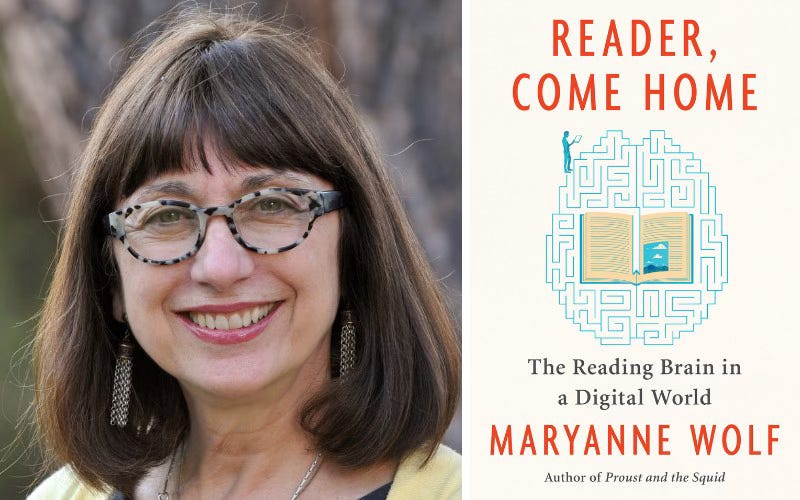
The neuroscientist Maryanne Wolf’s book Reader, Come Home, on ‘The Reading Brain in a Digital World’ was a key read on a topic I’m particularly interested in: the strains between the old and the new, and in reading terms between paper and screen.
I wrote about the book at length: it has become even more important in the six years since.
She cites a Native American story:
A grandfather is telling his young grandson about life. He tells the little boy that in every person there are two wolves, who live in one’s breast and are always at war with each other. The first wolf is very aggressive and full of violence and hate towards the world. The second wolf is peaceful and full of light and love. The little boy anxiously asks his grandfather which wolf wins. The grandfather replies, ‘The one you feed.’
2021
If you've been teaching for (cough cough) a certain number of years, then you go through a fair amount of technology, which seems cutting-edge at the time.
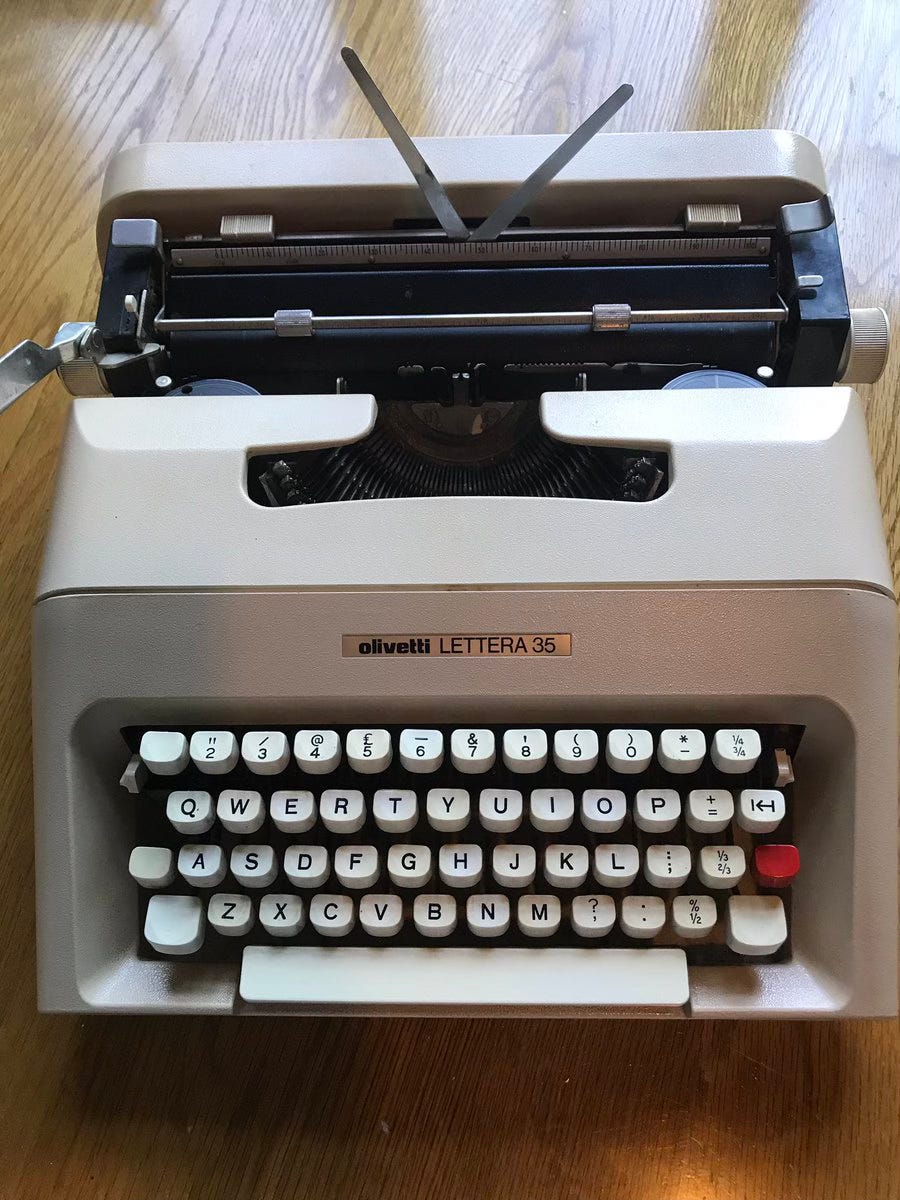
So I wrote a piece about this, including in the pre-internet era blackboards, the Palm V, OHPs, the visualiser, the Gestetner and more. Not to mention my typewriter, which I’ve had since my parents bought it new for me when I was a teenager. A beauty, eh? (typewriter, not teenager).
2022
James Harpur was not a poet I had read previously, but his collection The Examined Life is a great pleasure. A sequence of poems revisiting his years in an English boarding school (Cranleigh) in the early 1970s, it is tender, funny and beautifully-achieved. I was delighted he was able to visit our school and run a workshop for pupils.
My full review here.
2023
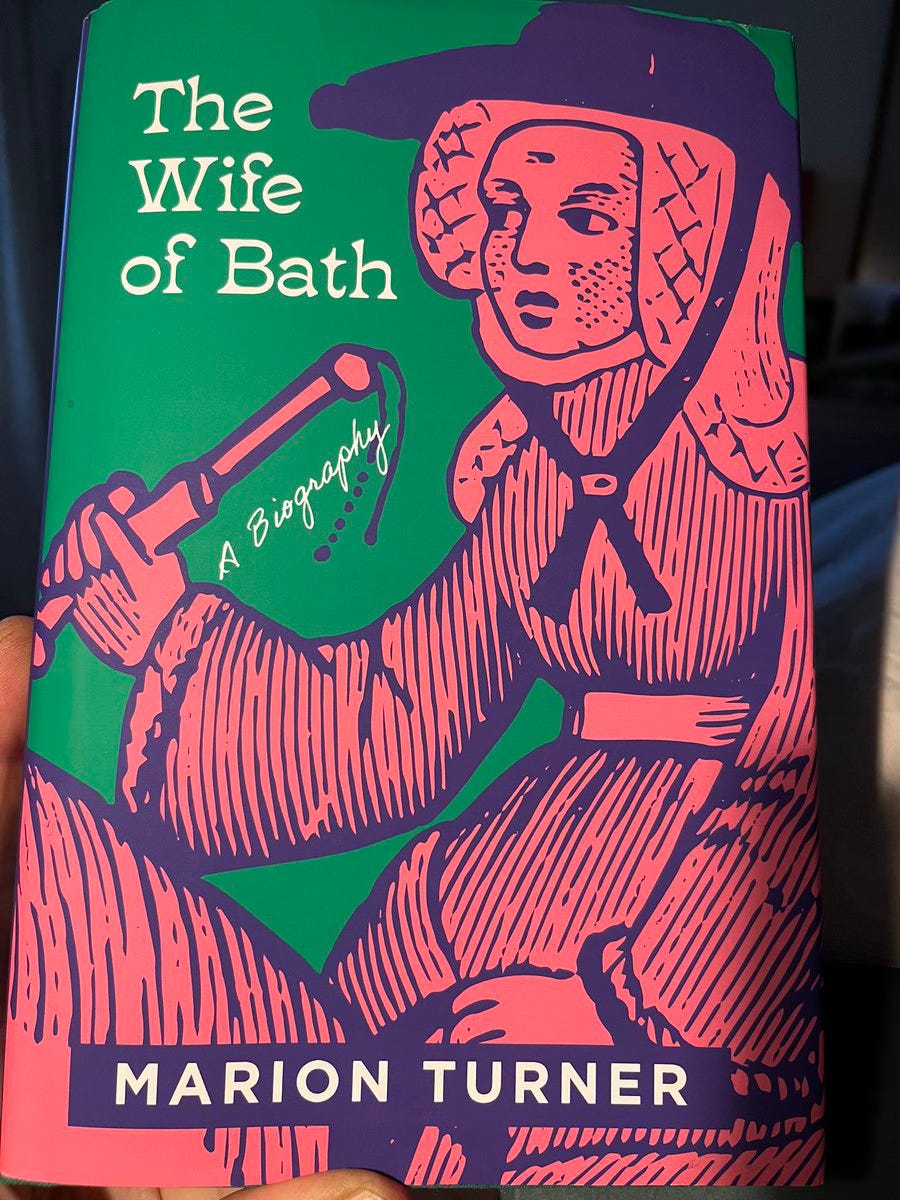
Marion Turner wrote an acclaimed biography of Geoffrey Chaucer, and now she has written another account, this time about one of his characters. The Wife of Bath was not a 'real' person, but over the centuries she has seemed very real to so many readers and writers. Turner turns the light on her brilliantly, firstly in her own historical and literary context, and then in the aftermath of that: Shakespeare of course (Falstaff and The Merry Wives of Windsor in particular), Voltaire, Pasolini, James Joyce and in contemporary terms Zadie Smith and Patience Agbabi.
My extended review.
2024
The perfect class is an impossibility. But just once in your career you should have the opportunity of having classes which come close.
29 years ago I did, together with my colleague John, when we co-taught Henry James’s masterpiece The Portrait of a Lady on a series of sun-drenched May evenings.
And here’s an audio recording of a discussion John and I had in 2009 about the novel.
2025
Neil Postman died in 2003 at the age of 73. Probably his best-known book is Amusing Ourselves to Death. I picked out my copy of Technopoly: the surrender of culture to technology, which was first published in 1992, and re-read it.
Postman is being cited a lot these days, in the context of the development of Generative AI and the dominance of our tech over-lords. It is extraordinary that he was so prescient about technologies which had hardly developed when he was writing.
A seminal book for our times. My response.
Teaching and Learning Things:
Carl Hendrick on ‘Privileging the Already Privileged’, starting with an analogy: Mystery Meat Navigation:
Embedded in this orthodoxy is a category error: the conflation of an outcome with a process. We all want students to be discovering knowledge for themselves as independent learners but in instructional design terms, independent learning is a bad way to become an independent learner.
Tom Sherrington: ‘The choreography of teaching 30 children at a time’. In my privileged teaching environment, not something I’ve had to do, but such a phenomenal challenge.
The idea of choreography is to emphasise the intentionality needed to teach 30 children at the same time and the need to orchestrate what students do very very deliberately. Everything you do – everything – has to be reviewed with a key question in mind: How will I make sure everyone is learning?
From The Economist: ‘Ed tech is profitable. It is also mostly useless.’
Back in 2013, Bill Gates remarked that it would take a decade to know whether education technology really worked. More than ten years and hundreds of billions of dollars later, the answer is increasingly clear. Notes Emily Cherkin, an advocate and fed-up parent: “Imagine if all that money had gone into teachers instead.”
From Ian Leslie in The Ruffian. A lovely story on a Sheffield scissors-maker, Wright Brothers. For me, echoes of what teachers do, and all their tacit knowledge. See a film of the work below.
It takes years to become a master putter-togetherer. Why - isn’t it just a matter of screwing two parts together? Well, no.
Et Cetera
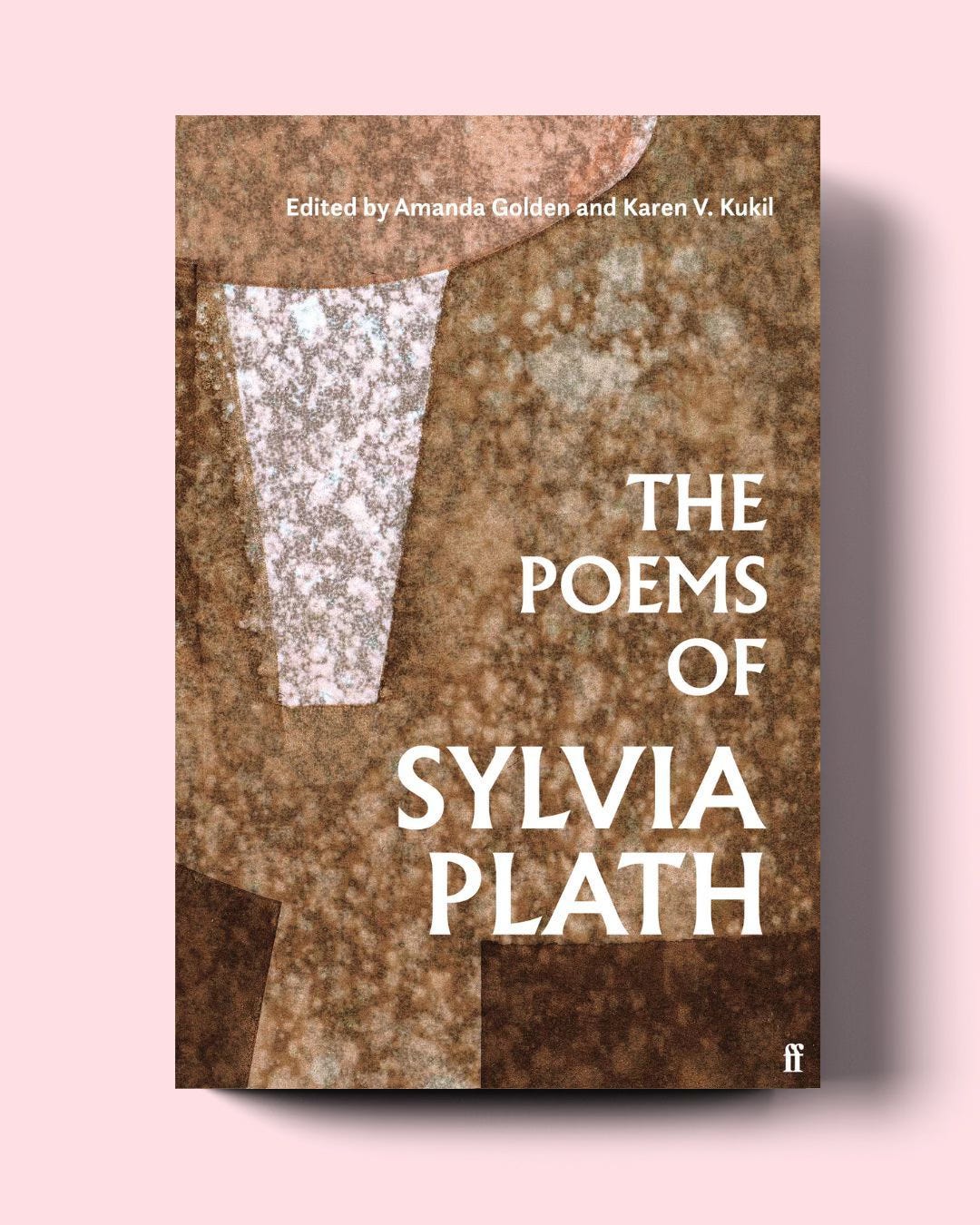
Faber are treating us these days. After last year’s magnificent Seamus Heaney collection, here comes The Poems of Sylvia Plath. “The definitive edition of Plath’s poetry, drawing on decades of research and almost doubling the content of the previous edition of Plath’s Collected Poems. Out 7 May 2026.” Editors Amanda Golden and Karen V. Kukil.
AFREADA linked to lots of interesting African literature. Now Literary Africa has arrived here.
Fascinating and rather beautiful: Traffic Mirrors in Japan by Takashi Yasui.
Thank you for the feature, Julian. And huge CONGRATULATIONS on 10 years! I loved reading through this. So incredible, well done. 😊
Congratulations Julian. 200! What a triumph. I’ve learned so much from Fortnightly over the years.